
The Coolest Innovations in Drones This Year (And What They Mean for Homeowners & Roofers
November 24, 2025
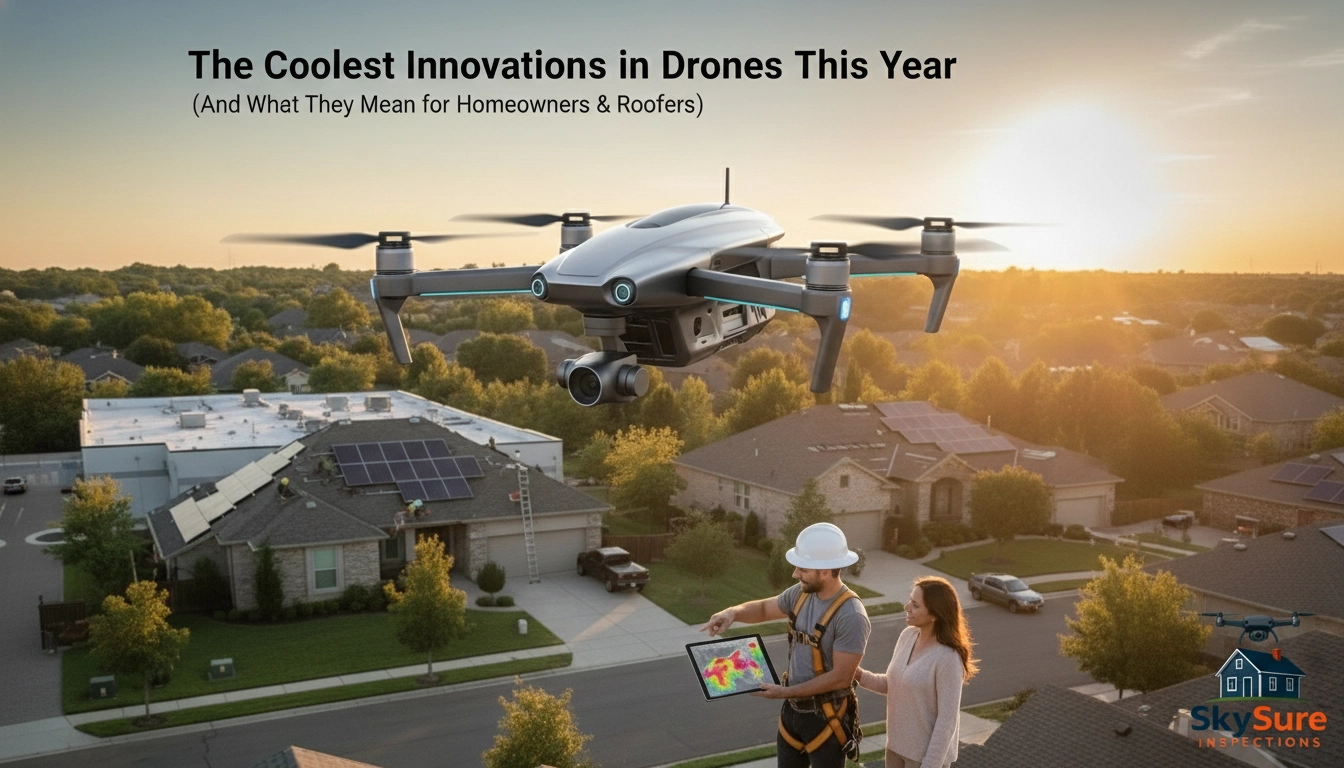
The drone industry hit a major turning point in 2025. What started as expensive gadgets for tech enthusiasts has evolved into practical tools that are changing how we maintain and inspect our homes. If you haven’t looked at drone technology lately, you’re missing some game-changing innovations that could save you time, money, and maybe even your safety.
AI Takes the Wheel (Or Should We Say Propeller?)
The biggest breakthrough this year is artificial intelligence making drones actually smart. We’re not talking about basic GPS navigation anymore. Modern drones now feature AI-driven flight controls that can navigate complex environments, anticipate obstacles, and make real-time decisions with minimal human input.
This means drones can operate in areas where GPS signals fail: like dense urban environments or heavily wooded properties. The AI handles mid-flight adjustments automatically when weather changes or unexpected obstacles appear. No more stopping inspections because a tree branch got in the way or wind conditions shifted.
For roof inspections, this translates to consistent, reliable coverage even when conditions aren’t perfect. The drone maps out the most efficient inspection route and adjusts on the fly, ensuring no section gets missed.
Sensors That See Everything
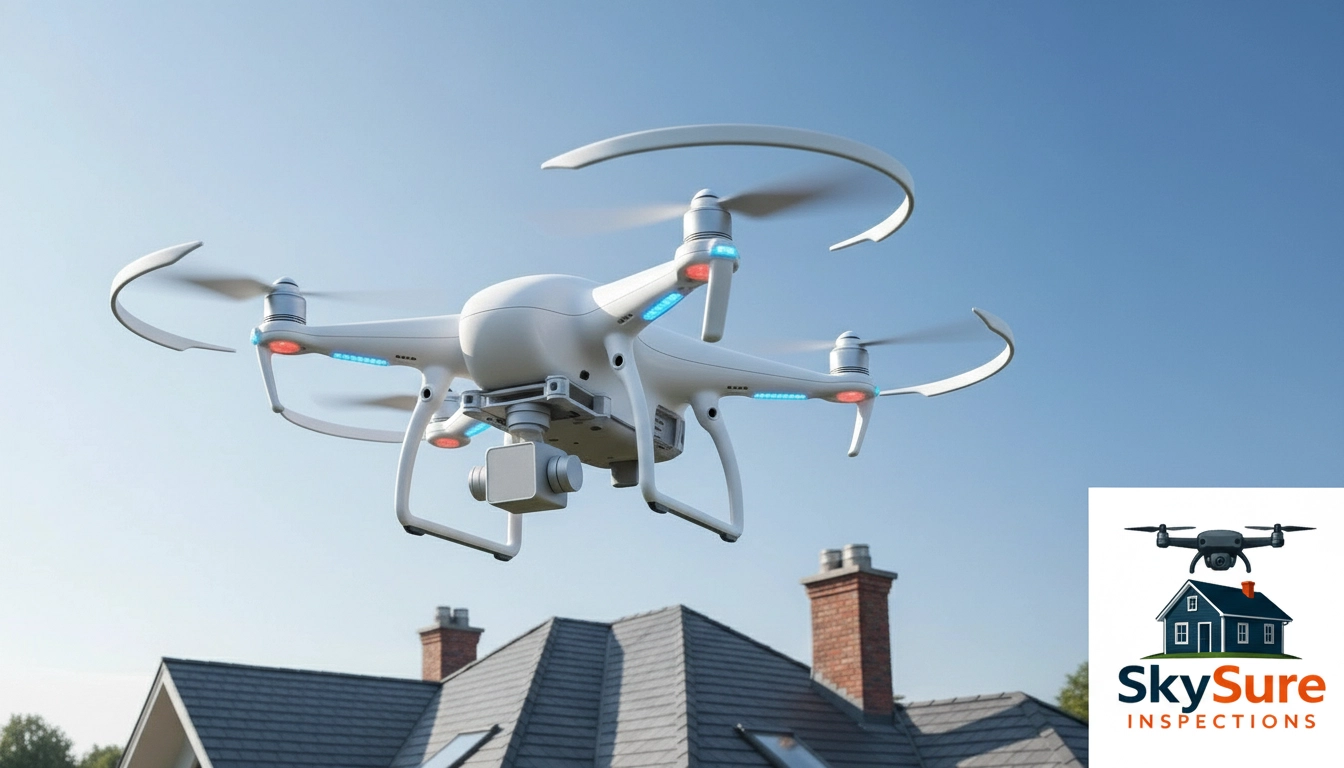
The sensor technology in 2025 drones is genuinely impressive. We’re talking about compact laser rangefinders, advanced LiDAR, infrared cameras, and multi-spectral sensors all packed into aircraft that weigh less than a laptop.
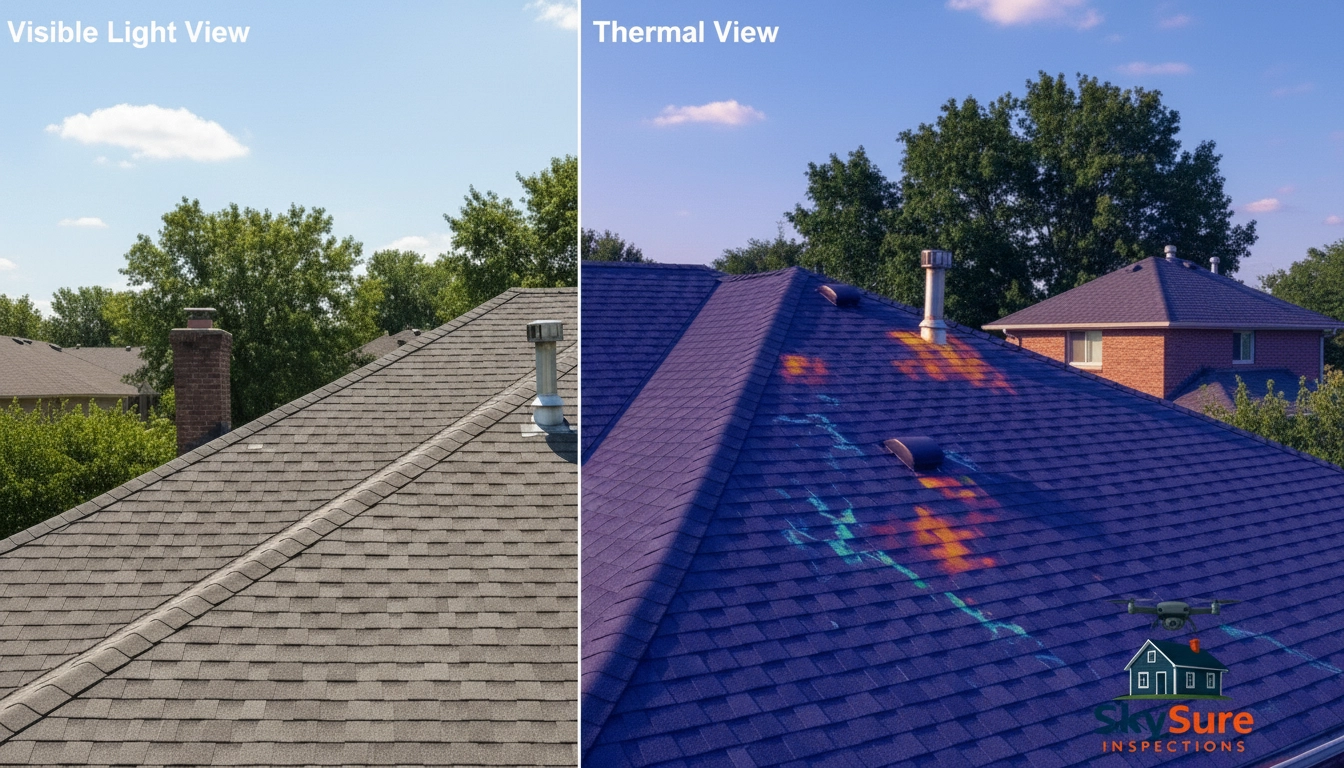
Thermal imaging has become the real star for roofing applications. These sensors can identify moisture trapped in hidden locations, heat escaping through insulation gaps, and water leaks that are completely invisible to human eyes. The thermal data reveals structural problems before they turn into expensive disasters.
Multi-spectral sensors add another layer of detection capability. They can identify different materials, spot vegetation growth, assess surface conditions, and even detect early signs of material degradation that regular cameras would miss.
Battery Life That Actually Works
Extended flight times were a major focus for manufacturers this year. Modern drone batteries can now power extended inspection missions without the constant interruption of battery swaps.
For larger properties or commercial buildings, this improvement matters significantly. What used to require multiple flights and several hours can now be completed in a single mission. The time savings cascade through the entire inspection process: less setup, less downtime, faster results.
What This Means for Homeowners
Safety First, Everything Else Second
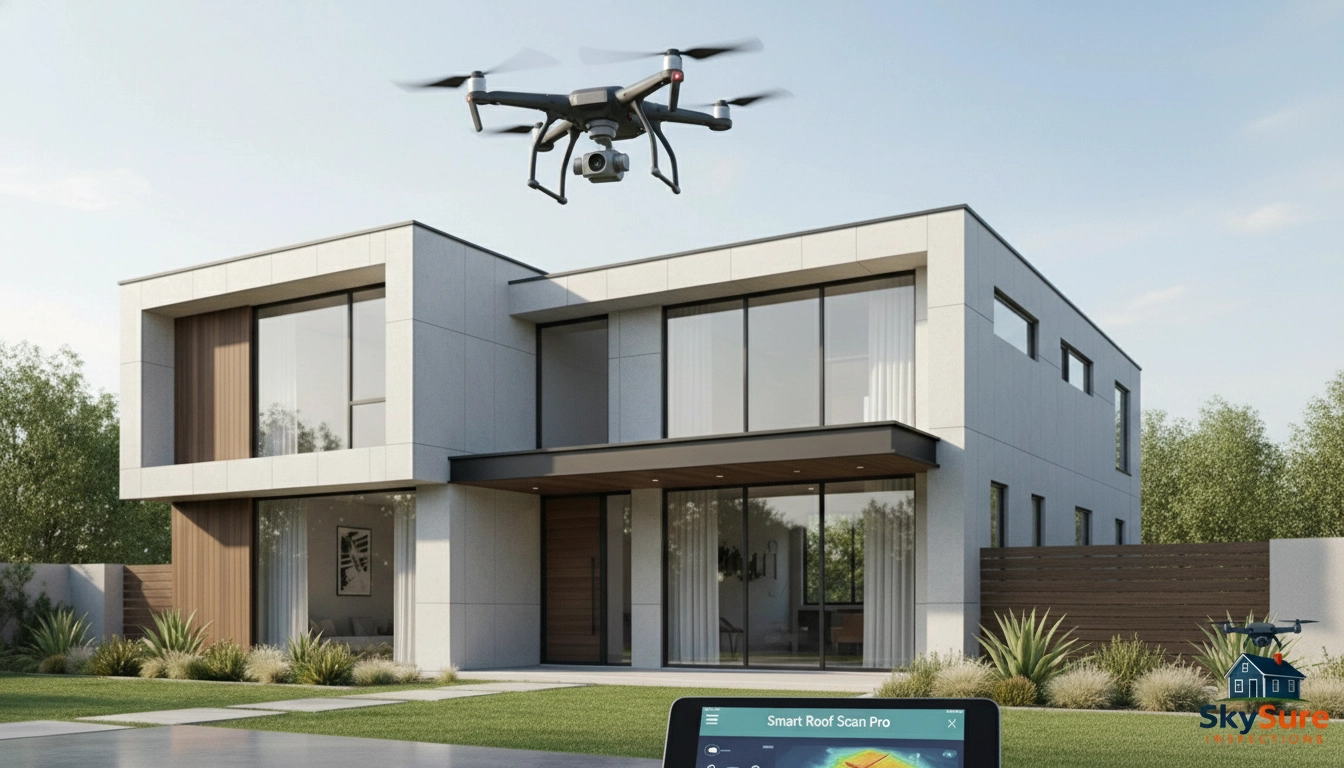
Traditional roof inspections require someone to climb ladders and walk on potentially dangerous surfaces. Drone inspections eliminate this risk entirely. Inspectors can perform comprehensive evaluations from the ground, which means fewer accidents and reduced liability concerns for property owners.
The safety benefits extend beyond just the inspection team. Homeowners no longer need to worry about workers potentially damaging roof materials or gutters during the inspection process.
Smarter Home Monitoring
Smart roofing systems are emerging that integrate directly with drone inspection data. These systems embed sensors for moisture detection, thermal monitoring, and real-time data collection into the roof structure itself.
The result is a predictive maintenance system that sends alerts through smartphone apps when maintenance is needed, often before problems become visible or cause damage. Your roof essentially gains its own early warning system.
Faster, More Accurate Estimates
When contractors use drone-captured imagery combined with AI analysis, repair estimates become significantly more precise. Drones capture hundreds of high-resolution images in minutes, and thermal data shows exactly where problems exist.
This precision translates to fairer quotes with fewer surprise costs when work begins. Contractors can provide detailed material lists, accurate labor estimates, and realistic timelines based on comprehensive data rather than educated guesses.
What This Means for Roofers
Competitive Differentiation
Roofing companies using advanced drone technology can distinguish themselves through faster response times and superior accuracy. A drone inspection that previously required hours now takes minutes, allowing roofers to handle more estimates daily and close more deals.
The detailed documentation provided by drone inspections also helps with customer communication. High-resolution imagery and thermal data make it easier to explain problems and justify recommended repairs.
Risk Management
Eliminating the need for workers to climb roofs dramatically reduces injury risk and associated liability costs. This protection benefits both the roofing crew and property owners, while potentially reducing insurance premiums for roofing companies.
Advanced Service Capabilities
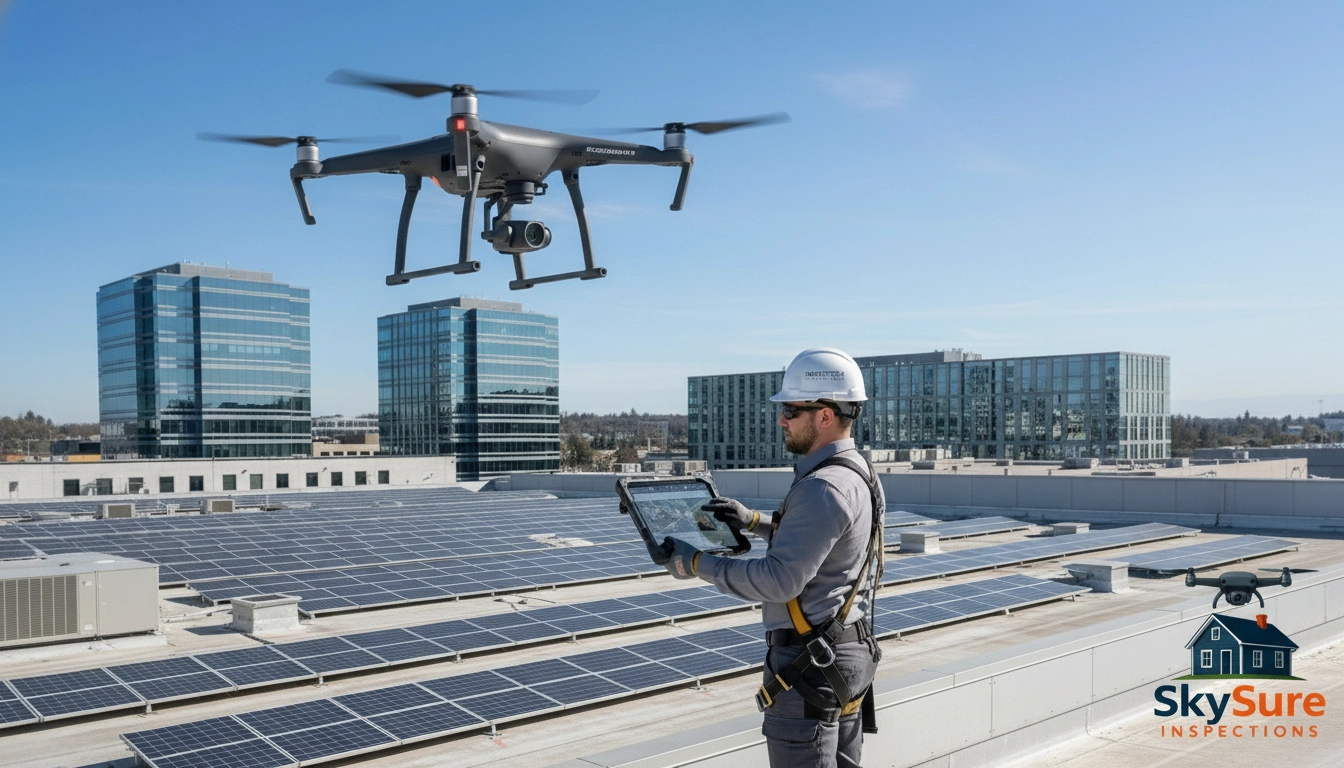
Modern drones enable services that go far beyond basic inspections. Roofers can now map repair areas precisely, monitor snow loads during winter, generate maintenance schedules based on predictive analytics, and even create augmented reality overlays for replacement planning.
The data collected during drone inspections integrates with project management software, customer relationship systems, and scheduling platforms, streamlining the entire service delivery process.
Integration with Existing Systems
One of the most practical innovations this year is how well drones now integrate with other business systems. Inspection data automatically flows into customer management platforms, scheduling software, and project tracking systems.
For homeowners, this means inspection results can integrate with home automation systems, insurance platforms, and maintenance tracking applications. The days of scattered paper reports and manual data entry are ending.
The Cost Factor
While advanced drone technology represented a significant investment just a few years ago, 2025 brought more affordable options without sacrificing capability. The cost-per-inspection has decreased while the quality and quantity of data collected has increased substantially.
This economic shift makes professional drone inspections accessible to more homeowners and profitable for more service providers. The technology is no longer limited to luxury markets or large commercial properties.
Looking at Real-World Applications
Property managers are using drone fleets for routine maintenance monitoring across multiple buildings. Insurance companies are requesting drone inspection data for claims processing and risk assessment. Real estate professionals are including drone inspection reports in property listings to differentiate their offerings.
The applications keep expanding as the technology becomes more reliable and cost-effective.
Getting Started
The drone innovation happening right now represents a fundamental shift in how property maintenance works. Whether you’re a homeowner looking for better property care or a roofing professional seeking competitive advantages, understanding these capabilities is becoming essential.
The convergence of AI autonomy, advanced sensors, extended flight capabilities, and smart integration is transforming roofing from a traditional trade into a technology-enhanced service. Homeowners get safer, more predictive maintenance. Contractors get tools that increase efficiency, accuracy, and profitability.
The entire industry is moving toward proactive maintenance rather than reactive repairs: a shift that benefits everyone involved. If you haven’t experienced modern drone inspection capabilities yet, now might be the time to see what all the innovation is about.
Ready to experience these innovations firsthand? Contact SkySure Inspections to schedule your drone roof inspection and see how 2025’s coolest drone technology can protect your property investment.